cat sitter checklist Cascais
Cat Sitter Checklist for Cascais Holidays
Direct answer: Before a Cascais holiday, leave your cat sitter clear feeding notes, litter instructions, key or access details, emergency contacts, vet information, medication notes, hiding places and the update style you want after each visit.
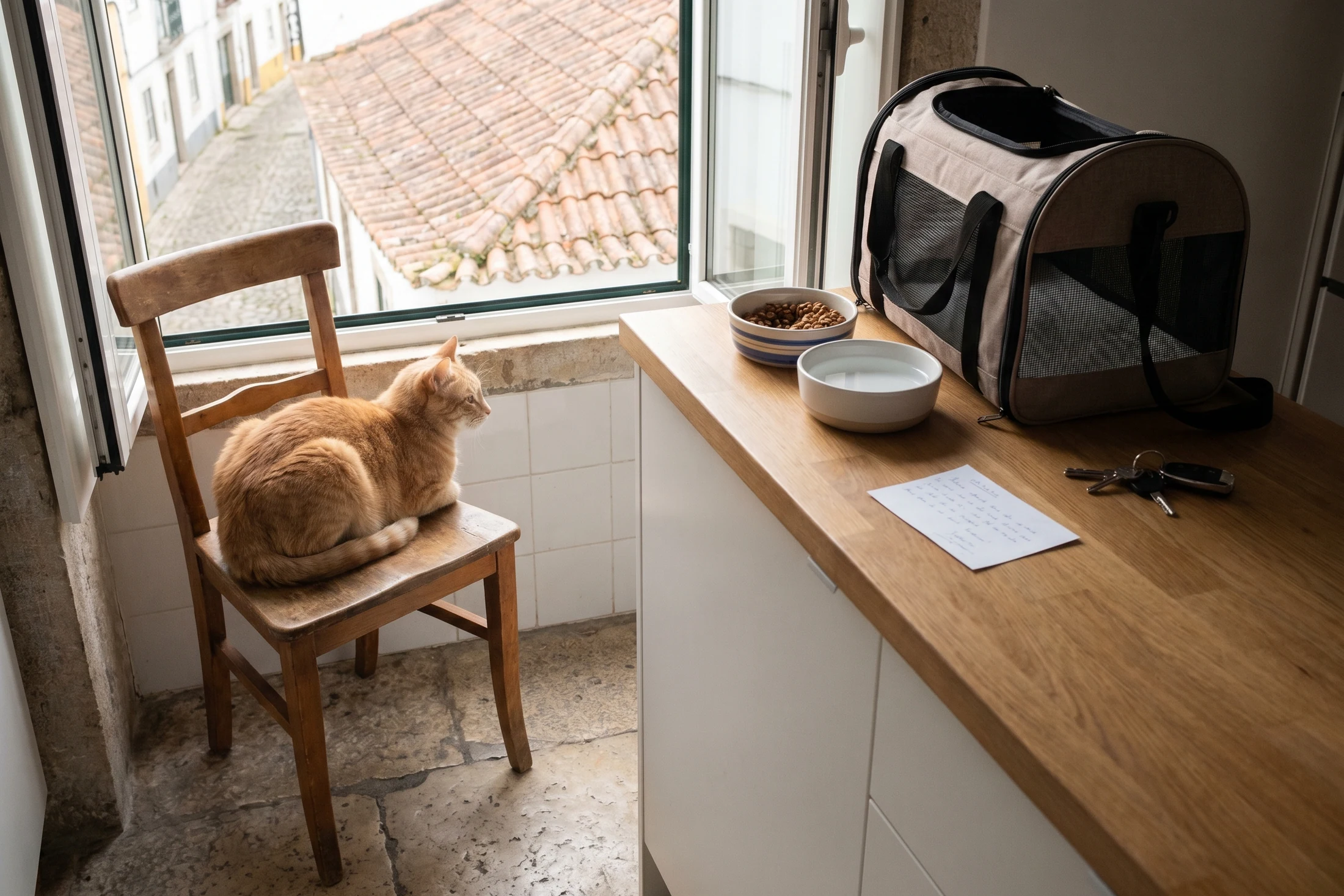
Most cat sitting problems are not caused by the cat. They are caused by missing access details, unclear food instructions or no backup plan. This checklist keeps the visit simple.
Quick summary
What to know before you read the full guide.
Before a Cascais holiday, leave your cat sitter clear feeding notes, litter instructions, key or access details, emergency contacts, vet information, medication notes, hiding places and the update style you want after each visit.
The checklist is built for apartment and house visits around Cascais, Estoril, Monte Estoril and nearby Linha areas where keys, building access, parking and concierge rules can matter.
Key handover or keybox tested before departure.
Local context
The checklist is built for apartment and house visits around Cascais, Estoril, Monte Estoril and nearby Linha areas where keys, building access, parking and concierge rules can matter.
Practical checklist
- Key handover or keybox tested before departure.
- Building door, apartment door, alarm and parking notes written down.
- Food amounts, bowl locations and treat rules clearly listed.
- Litter type, scoop location, bin rules and spare litter available.
- Vet contact, emergency contact and carrier location visible.
- Windows, balcony and rooms that must stay closed listed.
- Preferred photo/video update style agreed.
Start with access before food
The best food notes in the world do not help if the sitter cannot enter the home. Access is the first item on the checklist: main door, apartment door, gate, lift, alarm, keybox, concierge, parking and backup key. Write the access plan as if the sitter has never seen the building before.
Test keys and keybox codes before leaving. If a key sticks, say how it behaves. If the alarm needs a delay or a specific door sequence, write it down. If a neighbour holds a backup key, include the name and phone number.
For Cascais apartments, building names, entrance numbers and parking notes can save time. For houses, gate instructions, exterior lighting and alarm zones matter. A good access note turns a stressful first visit into a normal one.
Write the cat profile
A cat profile is not a biography. It is a practical note that helps the sitter understand what is normal. Include the cat's name, age, health notes, hiding places, favourite sleeping spots, normal greeting behaviour and anything that would be unusual.
For example, "Luna hides under the bed for new people but eats once the room is quiet" is useful. So is "Milo always meets people at the door; if he does not, please check the bedroom wardrobe." The sitter needs to know whether hiding is normal or a change worth reporting.
In multi-cat homes, write each cat separately. Say who eats first, who steals food, who uses which litter tray, and whether any tension is normal. Two cats in the same home can need very different handling.
Food notes that prevent mistakes
Write exact amounts, not "normal portion." Include wet food timing, dry food limits, supplements, treats, fridge storage and whether bowls should be washed or replaced. If food is mixed with water, medication or a topper, write the steps in order.
If one cat needs separate feeding, explain where and how. If one cat eats too fast, say whether the sitter should wait. If leftovers should be removed after a certain time, include that too. These details are small, but they keep the cat routine stable.
Leave more food than the exact trip requires. Delayed flights and changed plans are common enough that spare supplies are part of a serious checklist.
Water and litter setup
Leave more than one water source if possible. Bowls can spill, fountains can stop, and warm weather can make water checks more important. Tell the sitter where every bowl or fountain is and how it should be cleaned or topped up.
For litter, leave the scoop, bags, spare litter and cleaning product visible. Write where used litter should go and whether the building has rubbish rules. If a tray is hidden in a bathroom, laundry room or balcony area, make sure the sitter can reach it safely.
A litter note can also help spot problems. If your cat normally uses the tray once a day and suddenly there is nothing, or if the tray looks very different from normal, the sitter can include that in the update.
Medication and health notes
Medication notes need to be precise: name, dose, time, method, where it is stored, and what to do if the cat refuses. If medication is essential and time-sensitive, discuss whether the visit schedule can truly support it before booking.
Leave your usual vet contact and a local emergency contact. If you do not have a preferred vet, say so clearly. If urgent veterinary help is needed and no preference is listed, the fallback is the closest suitable local vet or emergency clinic available, while contacting you or your emergency contact as soon as possible.
Also leave the carrier in a visible place. If the carrier is in a storage room or garage, write exactly where. A carrier that cannot be found is not helpful in an urgent situation.
Cat Sitting Cascais is not a veterinary clinic. Simple routines may be agreed, but clinical advice and emergency care belong with a vet. If you are worried about whether travel is safe for your cat, ask your vet before you book.
Home safety checklist
Close unsafe windows, balcony access and rooms the cat should not enter. Check that internal doors cannot swing shut and block the cat away from food, water or litter. Remove elastic bands, string, fragile items and food that should not be reached.
Leave plants, appliances and cleaning products out of reach. If the cat is known to open cupboards, say so. If there is a balcony rule, make it explicit. "Balcony closed at all times" is clearer than assuming the sitter knows your usual rule.
The sitter can do basic home checks, but the owner should make the home safe before leaving. The best visit is not spent solving avoidable hazards.
Update preferences
Agree the update style before the first visit. Some owners want one photo and a short note. Others want food, water, litter and behaviour mentioned each time. If you are anxious while travelling, say what kind of update will help you relax.
For shy cats, the update may not include a perfect face photo. It may include proof that food was eaten, litter was used, water was changed and the cat was seen in a safe hiding place. That is still useful.
If something is unusual, the sitter should say so plainly. Owners do not need dramatic language. They need a clear note, a photo where helpful and a practical next step.
What to leave visible
Leave food, litter, bags, scoop, cleaning supplies, medication, treats, towels and the carrier where they can be found. Label anything that could be confused. If there are multiple foods, write which cat gets which one.
Leave Wi-Fi details only if needed for smart feeders, cameras or contact. If cameras are active in the home, tell the sitter before the visit. Clear expectations protect trust on both sides.
Leave your travel contact, a backup contact in Portugal if possible, and the vet contact. If you will be on a flight or out of signal, tell the sitter who can make a decision if needed.
Checklist for the day you leave
Before you close the door, walk through the visit as if you were the sitter: enter, turn off alarm, find cat or hiding spot, serve food, refresh water, scoop litter, check safe rooms, send update, lock up. If any step is unclear, write it down.
Send any last-minute changes in one message, not scattered across several chats. The sitter should not have to search through a long thread to find the current food amount or access code.
If your travel is delayed, message early. A clear delay note helps adjust food, water and visit expectations without guessing.
A ready-to-send handover format
Use this structure if you want the handover to be easy: dates, address area, cat names, visit frequency, access, food, water, litter, medication, hiding places, home safety, vet, emergency contact and update preference.
You do not need fancy formatting. You need enough detail that another person can follow the routine while you are tired, boarding a plane or out of signal. The more exact the handover, the calmer the visits.
A complete handover example
Dates: 4 to 9 August. Area: Estoril. Cat: Nala, eight-year-old indoor cat. Visits: one per day, flexible time. Food: half pouch wet food in the morning, dry food topped up to the marked line, treats only if she comes out calmly. Water: kitchen bowl and bedroom bowl changed every visit. Litter: covered tray in bathroom, scoop and bags under sink.
Access: key with concierge, backup key with neighbour Ana in apartment 3B. Alarm is off. Windows and balcony stay closed. Hiding places: under the bed or behind the sofa. Normal behaviour: shy for first two visits, usually eats once the room is quiet. Vet: clinic name and phone. Emergency contact: local family member.
Update preference: one photo if possible, plus short note on food, water, litter and whether she was seen. This kind of note is not fancy, but it gives the sitter everything needed for a safe first visit.
Checklist for shy cats
For shy cats, the sitter needs permission to be calm rather than intrusive. Write where the cat hides, whether the hiding place is safe, and how to confirm the cat is present without pulling them out. A shy cat under a bed may be fine. A shy cat trapped in a closed room is not.
Leave food and water in places that match the cat's normal routine. Do not move everything into a new setup just because you are travelling. The less you change, the easier it is to judge whether the cat is behaving normally.
Ask for updates that respect the cat. A photo of the cat hiding calmly, or a note that food was eaten and litter was used, can be better than a forced close-up that stresses the cat.
Checklist for kittens and young cats
Kittens usually need closer checks than stable adult cats. They can get into small spaces, spill water, play with unsafe objects and need more frequent feeding. If you are travelling while the cat is still young, discuss whether two visits are more appropriate.
Remove string, elastic bands, fragile decorations, loose plastic, unsafe plants and open bins. Check that windows and balcony access are secure. Kittens turn small hazards into real problems more easily than adult cats.
Leave extra food and litter. Young cats can be messy, and the sitter should not be forced to ration supplies because the exact amount ran out.
Checklist for senior cats
Senior cats may need a slower, more observant visit. Food intake, water intake, litter changes and movement can matter more. Write what is normal: appetite, stiffness, hiding, vocalising and medication if relevant.
Make resources easy to reach. If the cat struggles with stairs, do not leave the only water source upstairs. If the tray has high sides, say whether that is normal or whether there is a lower backup tray.
For older cats with health concerns, ask your vet before travel if you are unsure. A sitter can follow a routine, but cannot replace clinical monitoring.
Checklist for apartments and buildings
Cascais and Estoril apartment visits can involve several access points: outer gate, lobby door, lift, floor door and apartment door. Write each one in order. If the building has several entrances, include the correct one.
Tell the sitter about parking, concierge hours and whether neighbours are expecting anyone. If a concierge or neighbour may ask questions, make sure they know the sitter's name before the first visit.
If rubbish disposal has building rules, write them down. This prevents litter bags from being left in the wrong place or carried around unnecessarily.
Checklist for after you return
When you get home, check supplies, litter, water and the cat's behaviour before putting everything away. If any note from the sitter was unclear, clarify it while the trip is fresh. That makes the next handover stronger.
Save the final version of your instructions. Most owners improve the checklist after one trip because they learn what the sitter asked, what was missing and what details made the visits easier.
If you plan to travel again, update the checklist rather than starting from zero. Cats change, homes change and routines change, but a good base note saves time.
How to keep the checklist usable
A checklist should be easy to use during a real visit. Put the most important details first: access, cat names, food, water, litter, medication, emergency contact. Long background notes can come later. The sitter should not have to scroll through holiday details to find the alarm code.
Use short labels. "Food," "Litter," "Access," "Vet," and "Update preference" are enough. A tidy note is more useful than a beautifully written note that hides the practical information.
What to photograph before you leave
Photograph the food setup, litter supplies, carrier location and keybox if there is one. These photos can help the sitter confirm they are looking at the right thing. They are especially useful when there are several cupboards, several foods or a hidden utility area.
Do not rely only on photos. Pair each photo with words. A picture of bowls does not say how much food to serve or which cat eats where. Photos support the handover; they do not replace it.
What to update for the next trip
After the trip, ask what was unclear. Maybe the key worked but the building entrance was confusing. Maybe the cat hid somewhere you forgot to mention. Maybe the litter bags were hard to find. Those small notes are exactly what should be added before the next booking.
A good checklist becomes easier over time. Keep the version that worked, remove anything outdated, and update changes in routine before every new trip.
Questions owners ask
Should I hide the carrier?
No. Leave the carrier location visible in case the cat ever needs urgent transport to a vet.
What if I do not have a preferred vet?
Share your preferred vet if you have one. If no vet is provided and urgent veterinary help is needed, we use the closest suitable local vet or emergency clinic available and contact you or your emergency contact as soon as possible.
Should I leave spare keys?
If possible, yes. A backup key with a trusted neighbour or concierge reduces risk if one access route fails.
Can I book if I do not have a key plan yet?
You can ask about availability, but dates should not be considered settled until access is practical and tested.