cat sitting vs cattery Cascais
Cat Sitting vs Cattery in Cascais: Which Is Better?
Direct answer: Cat sitting is often better for cats who are settled at home, nervous with travel, or happiest keeping their normal food, litter and hiding places. A cattery may be better when a cat needs closer supervision than daily visits can provide.
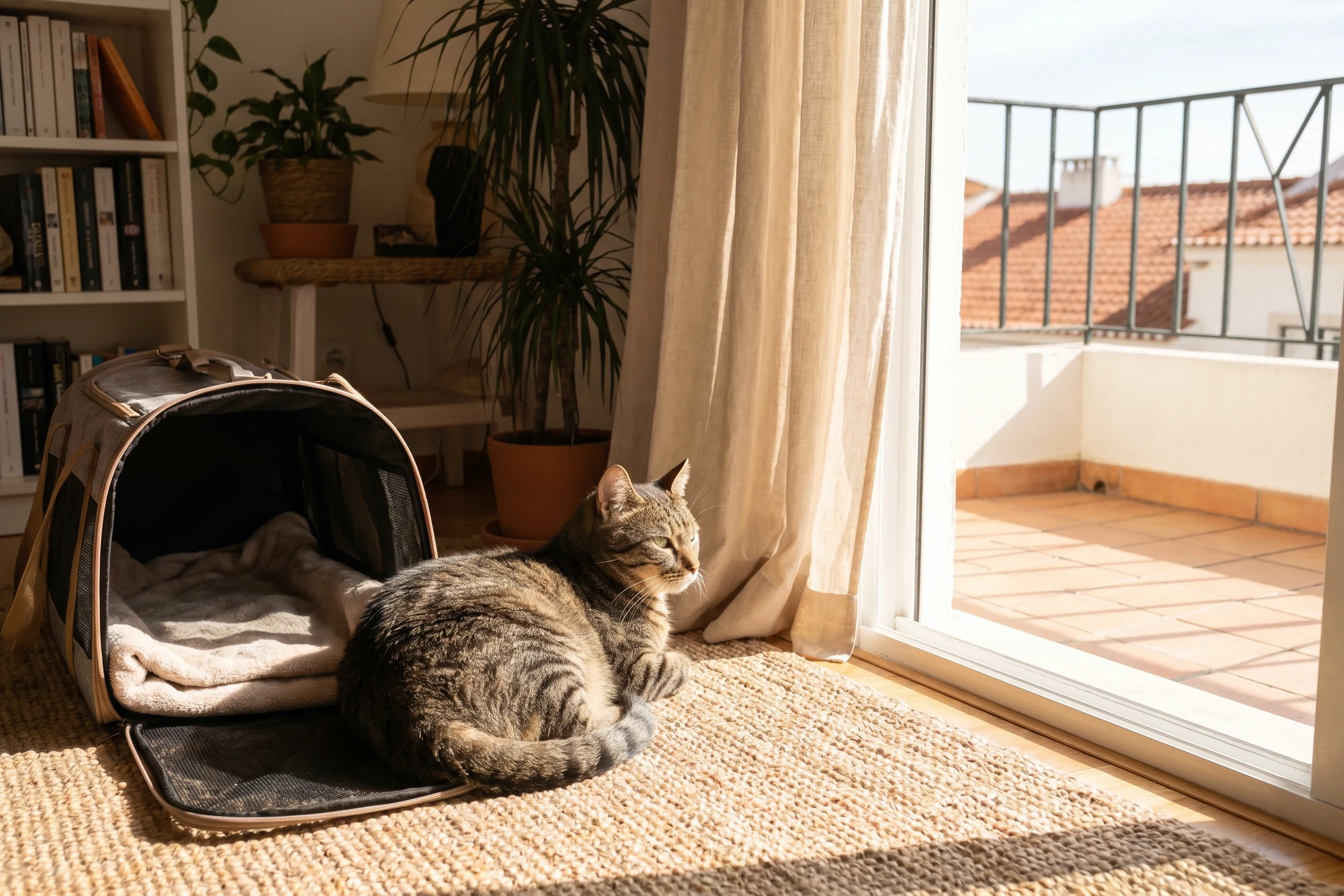
There is no single right answer for every cat. The right choice depends on temperament, health, routine, travel stress and how much supervision the cat needs.
Quick summary
What to know before you read the full guide.
Cat sitting is often better for cats who are settled at home, nervous with travel, or happiest keeping their normal food, litter and hiding places. A cattery may be better when a cat needs closer supervision than daily visits can provide.
In Cascais, Estoril and nearby Linha areas, home visits can be practical for owners who want to avoid transport and keep the cat in its normal home setup.
Choose home visits for cats who hide, dislike carriers or rely on familiar routines.
Local context
In Cascais, Estoril and nearby Linha areas, home visits can be practical for owners who want to avoid transport and keep the cat in its normal home setup.
Practical checklist
- Choose home visits for cats who hide, dislike carriers or rely on familiar routines.
- Consider a cattery when the cat needs more frequent supervision than visits can provide.
- Do not choose solely by price; choose by risk and fit.
- Ask how updates, medication notes and emergency contacts are handled.
- Make the decision before travel week, not the day before leaving.
The direct comparison
Cat sitting means the cat stays at home and a sitter visits to handle food, water, litter, welfare checks and updates. A cattery or boarding setup means the cat leaves home and is cared for in another place. Neither option is automatically better. The right answer depends on the cat, the home and the level of supervision needed.
Home cat sitting is often better for cats who dislike carriers, hide from new people, eat best in familiar rooms, or rely strongly on their own litter and sleeping places. A cattery may be better when the cat needs closer observation than daily visits can provide, when home access is impossible, or when the owner is not comfortable with someone entering the home.
The decision should be made before travel week. Last-minute choices usually create rushed access plans, unclear instructions and more stress for the owner.
Stress and routine
The biggest argument for home visits is continuity. The cat keeps the same rooms, smells, food area, litter tray, sleeping places and hiding spots. The sitter changes, but the territory does not.
For many cats, transport is the hard part. The carrier, car journey and unfamiliar environment can create stress before the holiday even starts. Some cats adapt well to boarding, but shy or indoor cats often cope better when the environment stays familiar.
The Cat Friendly Homes guidance supports the idea that predictable resources and safe places matter. That does not mean boarding is wrong. It means the cat's relationship with territory should be part of the decision.
Supervision level
A cattery may offer more continuous supervision than home visits, depending on the facility. That can matter for cats with health concerns, medication complexity or behaviour that makes daily visits too light.
Home visits are intermittent. A sitter checks the cat during the visit, then leaves. For a healthy, stable cat, that may be enough. For a cat needing close observation, it may not be. Owners should be honest about the difference.
The key question is: what could happen between visits, and would that risk be acceptable for this cat? If the answer worries you, ask a vet what level of care is appropriate.
Access, keys and property comfort
Cat sitting requires someone to enter the home. That means key handover, alarm instructions, building access, backup key plans and trust. For many owners, that is fine because the cat stays comfortable and the home gets checked. For others, it is a reason to prefer boarding.
A professional home visit plan should handle access clearly. The sitter needs written notes, tested keys, emergency contacts and permission to report home problems that affect the cat.
If you cannot create a reliable access plan, do not choose home visits. A sitter who cannot enter cannot care for the cat, no matter how good the rest of the plan looks.
Transport and carrier stress
Boarding requires transport. For cats who tolerate the carrier and travel well, that may be acceptable. For cats who panic, soil the carrier, refuse food after travel or hide for days after change, transport itself becomes a major factor.
Home visits avoid that journey. The cat may still notice that the owner is away, but the familiar environment can reduce the number of changes happening at once.
If your cat has never boarded before, do not assume it will be easy during a long holiday. Test your assumptions early, not the week you leave.
Food, litter and multi-cat routines
Home visits are strong when the cat's normal food and litter setup matters. Wet food timing, separate feeding, water fountains, familiar litter type and multi-cat routines can all be easier to maintain at home.
In multi-cat homes, home visits can preserve the existing group dynamic. Cats who live together can stay together, with separate food notes if needed. The sitter needs clear instructions about who eats what and whether any tension is normal.
Boarding may still be better if the cats need a controlled environment or closer observation. Again, the choice depends on supervision need, not just preference.
Cost is only one part of the decision
Cat sitting prices in Cascais start from EUR17 for a weekday 45-minute visit and EUR19 for weekends and holidays. Boarding prices vary by provider, setup and dates. Comparing only the daily number can be misleading because the services are structurally different.
Home visits may be efficient for one stable cat or a multi-cat home where all cats stay together. Boarding may be better value if the cat needs more supervision. The useful comparison is not cheapest versus most expensive; it is whether the price matches the risk and level of care.
If you need help with the price side, read the cat sitting prices guide.
When home visits are the better fit
Choose home visits when the cat is healthy, settled, strongly attached to familiar territory, nervous with transport, or happiest with its normal food and litter routine. Home visits also suit owners who want basic home checks and photo or video updates while travelling.
Home visits work best when access is reliable, the home can be made safe, and the owner leaves clear notes. They are not a magic solution for every cat. They are a strong solution for the right cat and the right home setup.
For Cascais, Estoril and Monte Estoril owners, home visits can be especially practical because travel time is manageable and daily visits can be scheduled around nearby addresses.
When a cattery may be better
A cattery may be better if the cat needs closer supervision, if medication is complex, if the owner is uncomfortable with home access, or if the home cannot be made safe. It may also be the right choice when travel is long and the owner wants more continuous monitoring.
Ask questions before choosing a cattery: how cats are housed, what updates are sent, how stress is handled, what vaccination or health requirements apply, and what happens if the cat refuses food. Those details matter more than a quick yes or no.
If your cat has medical needs, ask your vet. A sitter and a cattery can both have limits, and the vet can help you decide what level of care is responsible.
A decision rule for Cascais owners
Start with the cat. If your cat is stable, home-oriented and mainly needs routine care, home visits are often the cleaner option. If your cat needs more supervision than a daily or twice-daily visit can provide, look at boarding or veterinary advice.
Then look at the home. If keys, alarms, windows, balconies and emergency contacts can be handled clearly, home visits are practical. If access is uncertain or the home is unsafe, boarding may be simpler.
Finally, look at the owner. If you will relax only when the cat is in a supervised facility, that matters. If you will relax only when the cat stays in familiar territory, that matters too. The best plan is the one that gives the cat appropriate care and the owner clear updates.
A side-by-side way to think about it
Home visits keep the environment stable and change the caregiver. Boarding changes the environment and may provide a different supervision pattern. That one sentence is the simplest comparison. The rest of the decision is about which change your cat can handle better.
If the cat is confident, healthy and adaptable, either option may work. If the cat is fearful, strongly territorial or stressed by transport, home visits may be kinder. If the cat needs close monitoring, boarding or veterinary advice may be safer.
Owners often ask which option is more loving. That is the wrong frame. The more useful question is which option matches the cat's real risks.
Questions to ask a cat sitter
Ask what is included in each visit, how long the visit lasts, what the update includes, how keys are handled, what happens if the cat hides, and what information is needed before the booking is confirmed.
Ask whether the sitter is comfortable with your specific routine: medication, separate feeding, shy behaviour, balcony rules, water fountains or alarms. A good answer can include limits. Limits are better than vague overpromising.
Ask how problems are reported. You want calm, direct communication, not a dramatic message and not silence. The update process is part of the service.
Questions to ask a cattery or boarding provider
Ask how cats are housed, how much contact they receive, what vaccination or health rules apply, how food and medication are handled, and what happens if the cat refuses food. Ask whether updates are sent and how stress is managed.
Ask about transport if you cannot deliver the cat yourself. Travel is part of the experience, not a side detail. A cat who struggles with the carrier may need extra planning before boarding.
Ask what happens in an emergency and which vet is used. The answer should be specific enough that you know who makes decisions and how you will be contacted.
Common wrong reasons to choose
Do not choose home visits only because they sound cheaper. Choose them because the cat is suited to staying home and the access plan is reliable. If the cat needs closer supervision, a lower visit price is not the deciding factor.
Do not choose boarding only because it feels more official. Ask what the cat will experience: space, noise, handling, feeding, litter, hiding places and updates. A facility can be good, but you still need details.
Do not choose either option because you feel guilty. Guilt is not a care plan. Facts are: health, temperament, supervision need, routine and access.
How to make home visits stronger
Prepare the home with clear instructions, tested keys, visible supplies, backup water, safe windows and a visible carrier. Make sure the sitter knows what is normal for the cat and what should trigger a message.
Choose one or two visits based on the routine. If the cat eats wet food twice daily, needs medication, or becomes anxious, two visits may be more appropriate. If the cat is stable and independent, one visit may be enough.
Ask for updates that include substance, not only photos. Food, water, litter and behaviour matter. A beautiful photo without care details is not as useful as a plain update that tells you the cat is okay.
How to make boarding stronger
If you choose a cattery, prepare the cat's routine clearly. Send food notes, medication notes, stress signals and anything that helps the provider understand normal behaviour. Familiar bedding or permitted items may help if the provider allows them.
Do not make the first carrier experience the day of a long trip. If your cat is carrier-averse, start acclimating earlier or ask your vet for advice. Transport stress can shape the whole experience.
Confirm pickup, drop-off, emergency contacts and update expectations before the trip. Boarding is easier when the owner knows exactly what will happen and when.
How to decide for a nervous cat
For a nervous cat, list the stressors in each option. Home visits mean a new person enters the home, but the territory stays familiar. Boarding means the caregiver may be present more often, but the cat must handle transport and a new place. Which stress is smaller for this cat?
If the cat hides from visitors but eats normally after they leave, home visits may still work. If the cat panics during owner absence or needs constant observation, boarding or veterinary guidance may be stronger. The details decide it.
How to decide for a senior cat
For a senior cat, focus on health stability, mobility, appetite and medication. A senior cat who is stable and hates transport may be happier at home with careful visits. A senior cat who needs close monitoring may need more support.
Do not use age alone as the rule. Some older cats are steady and predictable. Some younger cats are complex. The care choice should follow the cat's actual needs.
How to explain the choice to yourself
A good choice should be easy to explain in one sentence: "We chose home visits because she is healthy, hates the carrier and does best in her own rooms." Or: "We chose boarding because he needs closer monitoring than visits can provide."
If you cannot explain the choice without saying "I just hope it works," gather more information before booking. Ask the sitter, ask the cattery, and ask your vet if health is part of the decision.


Questions owners ask
Is cat sitting less stressful than a cattery?
For many cats, staying in a familiar home can be less disruptive, but cats with higher care needs may need a different setup.
Can a sitter give medication?
Simple medication routines may be possible if agreed in advance, but the service is not veterinary care and emergency medical needs require a vet.
What if my cat hides from the sitter?
That can be normal for shy cats. The sitter still checks food, water, litter and signs that the cat is present and safe, without forcing contact.