leave cat at home while travelling Cascais
Can You Leave a Cat at Home While Travelling from Cascais?
Direct answer: Many adult cats can stay at home while you travel if a reliable sitter visits daily, refreshes food and water, cleans litter, checks the cat and sends updates. Kittens, senior cats, medication routines and anxious cats may need two visits a day or a different care plan.
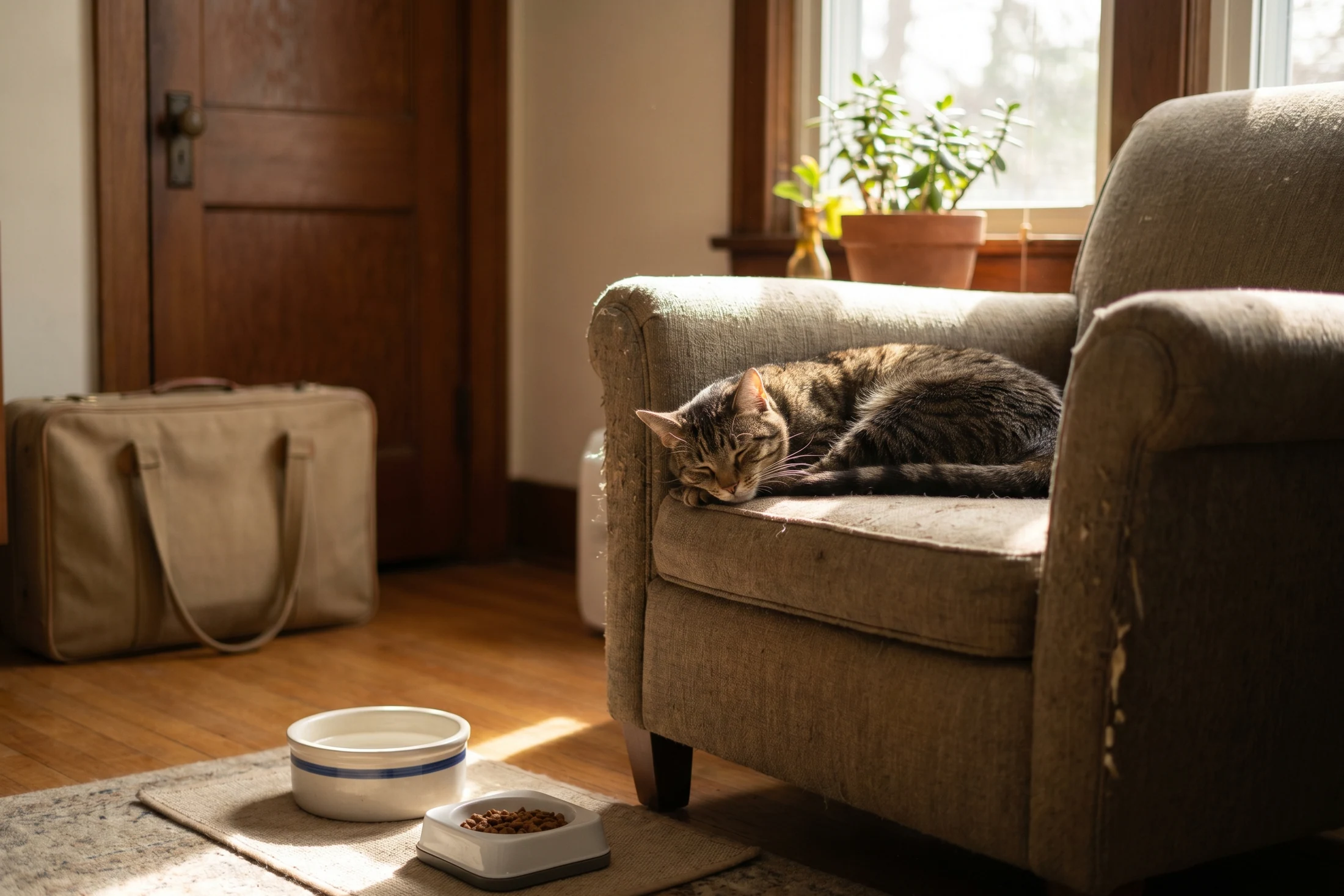
The real question is not whether cats can be alone. It is how long, with what routine, and with what backup if something changes while you are away.
Quick summary
What to know before you read the full guide.
Many adult cats can stay at home while you travel if a reliable sitter visits daily, refreshes food and water, cleans litter, checks the cat and sends updates. Kittens, senior cats, medication routines and anxious cats may need two visits a day or a different care plan.
This guide is for Cascais-area owners planning short trips, weekends away or longer holidays from Cascais, Estoril, Monte Estoril and the Linha.
Book at least one daily visit for food, water, litter and welfare checks.
Local context
This guide is for Cascais-area owners planning short trips, weekends away or longer holidays from Cascais, Estoril, Monte Estoril and the Linha.
Practical checklist
- Book at least one daily visit for food, water, litter and welfare checks.
- Use two visits if your cat eats wet food twice daily or needs timed medication.
- Leave more than one water source in separate places.
- Close unsafe rooms, windows and balcony access before leaving.
- Leave a carrier, vet contact and emergency contact.
The honest answer
Many adult cats can stay at home while you travel if a reliable sitter visits daily, refreshes food and water, cleans litter, checks the cat and sends updates. That does not mean every cat should be left with the same plan. Age, health, feeding routine, temperament and home safety all matter.
A calm adult cat with simple food and a stable litter routine may do well with one daily visit. A kitten, senior cat, cat on medication, cat eating wet food twice daily or cat who becomes distressed when alone may need two visits a day or another care option.
The goal is not to prove that home visits are always enough. The goal is to choose the lightest care plan that is still responsible for your specific cat.
Why cats often prefer staying home
Cats rely on familiar territory. Their safe places, scent, litter box, food area, sleeping spots and window routes are part of how they feel secure. Transport, a carrier and a new place can be stressful even when the destination is good.
The Cat Friendly Homes guidance explains why secure places and predictable resources matter. Home visits work with that idea. The cat stays where the resources already make sense, and the sitter maintains the essentials while the owner is away.
This is especially relevant for indoor cats in Cascais apartments. If the cat is already settled in a safe indoor routine, a home visit can be less disruptive than changing everything for a short trip.
When one daily visit can be enough
One visit can be enough for a healthy adult cat who eats normally, uses the litter tray reliably, has no urgent medical needs and is comfortable spending time alone. The visit should include food, water, litter care, a welfare check and an update.
The home setup must also be safe. Windows, balconies, unsafe rooms and internal doors need attention before you travel. A cat who can accidentally be shut away from water or litter needs a better setup, not just a sitter.
One visit is not a free pass to leave large bowls of food and hope for the best. It is a daily human check, and that check is the reason the plan can work.
When two visits are safer
Two visits are safer for kittens, senior cats, cats on timed medication, cats who eat wet food twice daily, cats with separation stress and multi-cat homes that need separate feeding. Two visits reduce the time between welfare checks and help keep the normal rhythm closer to what the cat expects.
Two visits also make sense in warm weather, longer trips and homes where water or food needs closer monitoring. Cascais summers can make owners more sensitive to water, ventilation and freshness, especially in apartments that get strong sun.
If you are unsure, describe the normal day. If your cat normally depends on morning and evening care, start by assuming two visits are more appropriate, then reduce only if the facts support it.
What not to rely on
Do not rely on a large bowl of food for several days. It gives no welfare check, no litter care, no proof that water is available, and no way to notice vomiting, appetite changes, a stuck door or a feeder problem.
Do not rely on an automatic feeder as the whole plan. Feeders can help with timing, but they do not clean litter, refresh water, check the cat or notice home problems. They are a tool, not a sitter.
Do not leave unclear access. A sitter who cannot get in cannot help the cat. Keys, alarms, keyboxes, concierge rules and backup contacts need to be solved before the trip.
How long is too long
There is no responsible answer based only on the number of days. A two-night trip for a healthy adult cat with daily visits may be straightforward. A single night can be risky for a kitten, a sick cat or a cat who needs medication at exact times.
For longer trips, the plan should become more detailed, not more relaxed. More days away means more chances for food supplies to run low, litter to need attention, water systems to fail, or behaviour to change.
If the trip is long, leave more supplies than required, a clear emergency contact, a carrier, vet details and instructions for what should happen if travel is delayed.
Preparing the home before travel
Set up more than one water source, leave food clearly labelled, put litter supplies in sight and close unsafe rooms. Check windows and balconies. Make sure internal doors cannot trap the cat away from food, water or litter.
Leave a carrier somewhere visible. If the cat hides, write the usual hiding places. If a cat is allowed in some rooms but not others, write that down. A sitter should not have to guess which closed door is normal.
If you use cameras, feeders or fountains, explain anything the sitter needs to know. Technology can be useful, but it should not make the care plan harder to understand.
What the sitter should report
A useful update covers what matters: food, water, litter, cat seen or checked, and anything different from normal. Photos and videos help, but the note itself should be practical.
Examples of useful notes include "ate most wet food, dry bowl still half full, litter used, water changed, seen under sofa and calm" or "did not come out today, food from yesterday mostly untouched, please confirm if this is normal."
The sitter should not dramatise normal hiding, but should not ignore real changes either. The owner helps by explaining what normal looks like before the trip.
When to ask a vet before travelling
Ask a vet if the cat is not eating normally, has recent surgery, has unstable symptoms, needs complex medication, is very old and fragile, or has a condition where delay could be dangerous. A home visit is not clinical monitoring.
The DGAV is the Portuguese animal authority, and your own vet is the best contact for medical decisions about your cat. A sitter can follow agreed care notes, but medical judgement belongs with a veterinary professional.
If the vet says the cat needs close supervision, choose care that matches that level of need. It is better to choose a more supported plan than to use home visits for a situation they were not designed for.
A practical decision rule
Use one daily visit when the cat is healthy, adult, stable, independent and has a safe home setup. Use two visits when meals, medication, age, stress, warm weather or multiple cats make a single check too light.
Choose another care option if the cat needs constant monitoring, access is unreliable, or the home cannot be made safe. The right answer is the one that keeps the cat calm and protected, not the one that sounds most convenient for the owner.
Short trip, long trip and holiday-period differences
A short weekend trip for a healthy adult cat may need a simple daily visit plan. Food, water, litter, welfare check and update may be enough if the home is safe and access is reliable. The shorter the trip, the easier it is to keep the plan simple.
A longer holiday needs more margin. Supplies must last longer, water systems need backup, litter needs enough spare material, and the sitter needs a clear plan if your return is delayed. The same cat can need a more detailed plan for ten days than for two days.
Holiday periods in Cascais add scheduling pressure. Summer, Christmas and school breaks are not the time to test a vague plan. Book earlier, confirm access earlier and leave more complete notes.
How to tell if your cat is coping
A cat who eats normally, uses the litter tray, appears in usual places and behaves within their normal range is probably coping with the visit plan. A shy cat may not socialise, and that alone is not a failure if hiding is normal for them.
Signals worth noting include food untouched, no litter use, repeated vomiting, unusual hiding, unexpected aggression, escape attempts or water not being touched. These signs do not automatically mean an emergency, but they need clear owner communication.
The sitter's update should compare the visit to your notes. "This is normal for him" and "this is different" are more useful than a generic message saying everything is fine.
How much food and water to leave
Leave more food than the exact number of visits requires. Travel delays happen, and spare supplies prevent stress. Label foods clearly if there are different flavours, supplements or separate diets.
Leave more than one water source. Bowls spill, fountains stop and some cats prefer one location over another. If the weather is warm or the apartment gets strong sun, water planning becomes more important.
Do not rely on one automatic feeder and one water bowl as the whole system. Technology can help, but it should have a backup and a human check.
What to do if your cat has separation stress
Some cats become unsettled when the owner leaves even if they are physically safe. Signs can include hiding, vocalising, changes in appetite, over-grooming or unusual litter behaviour. If your cat has a history of this, mention it before booking.
Two visits, longer calm presence, familiar toys and consistent update timing may help some cats. Other cats do better with minimal disturbance and a quiet routine. The plan should match the individual cat, not a generic idea of comfort.
If stress is severe or linked to health changes, ask your vet. Behaviour and medical issues can overlap, and a sitter should not be expected to diagnose the cause.
Why the sitter needs emergency authority
Before travelling, decide who can make a decision if you are unreachable. If the sitter sees a serious problem and you are on a flight, there should be a local emergency contact or clear vet instruction.
Leave the carrier visible and write the vet contact. If no preferred vet is provided and urgent help is needed, the practical fallback is the closest suitable local vet or emergency clinic available. If the cat has insurance, medical history or medication, leave the relevant details somewhere accessible. The goal is not to expect an emergency. It is to avoid losing time if one happens.
This is especially important for longer travel, older cats and cats with known health conditions. A daily visit is much stronger when the backup plan is already written.
A simple home-readiness test
Before leaving, ask whether the cat can reach food, water, litter and safe sleeping places if any one door closes. Ask whether there is backup water if one bowl spills. Ask whether the sitter can find the carrier in under one minute.
Then ask whether the sitter can enter without calling you. If the answer is no, fix access before travel. If the sitter needs you to answer a phone to enter the home, the plan is fragile.
Finally, ask whether the sitter can describe what is normal for your cat. If not, your notes need more detail. The best travel plan is the one that still works when you are tired, delayed or out of signal.
What "safe at home" really means
Safe at home means the cat has daily welfare checks, enough food, clean water, usable litter, a safe environment and a person who can respond if something changes. It does not mean leaving the cat completely alone because cats are independent.
The difference is important. Cats can be low-maintenance compared with some animals, but they are not self-managing when water spills, food runs out, litter becomes unusable, a door closes or the cat stops eating.
When to upgrade the plan during a trip
Sometimes the first visit reveals that the plan should change. The cat may be more stressed than expected, the wet food may not be eaten, the litter may need more attention, or the home may be warmer than expected. A good owner-sitter relationship allows practical adjustments.
If extra visits are possible, they should be agreed clearly. If they are not possible, the sitter and owner need to decide the next best step, such as contacting a local emergency contact or vet. This is another reason to leave backup details before travel.
What owners usually feel anxious about
Most anxiety is about the unknown: Did the sitter get in? Did the cat eat? Is the litter okay? Did the cat hide? The update should answer those questions directly. A short, factual message after each visit is often enough to make travel feel manageable.
If you know you will worry, say so. Asking for a clear update is normal. The sitter can then provide the kind of proof that helps without turning the visit into a long report.


Questions owners ask
Can a cat be left alone for a weekend?
A weekend can work for some adult cats if a sitter visits daily. Cats with medication, special feeding, health concerns or anxiety may need more support.
Is an automatic feeder enough?
No. A feeder does not clean litter, check water, notice illness, confirm the cat is safe or send a useful update.
Should I book two visits a day?
Book two visits if meals, medication, age, stress or multi-cat routines make one visit too light.
What happens if no preferred vet is listed?
If urgent veterinary help is needed and no preferred vet is listed, we go to the closest suitable local vet or emergency clinic available, while contacting you or your emergency contact as soon as possible.